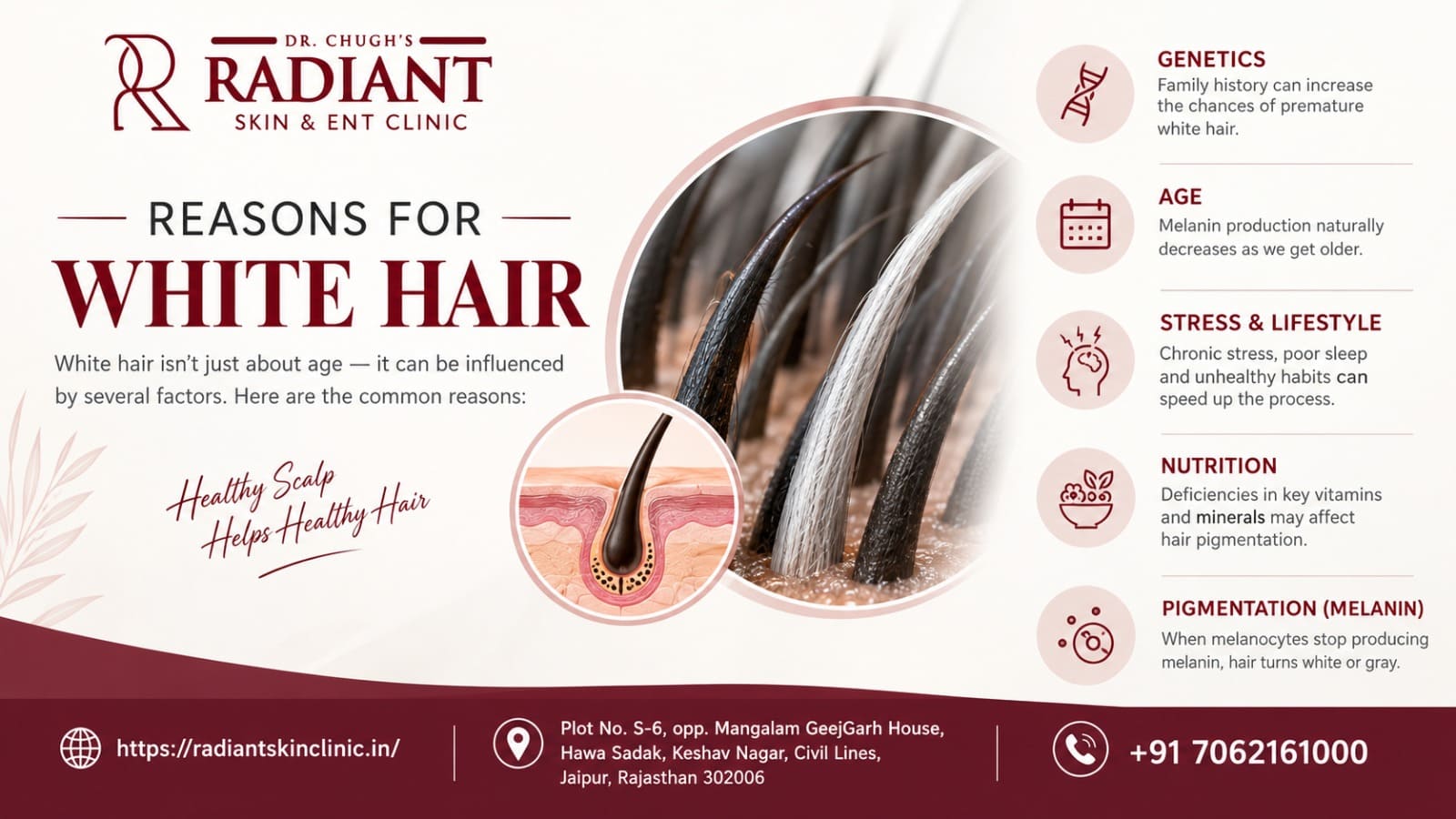
The reason for white hair is usually a natural drop in melanin production as hair follicles age, typically starting in the mid-30s. However, white hair at a young age can signal iron deficiency, vitamin B12 deficiency, thyroid disorders, or high stress. If you’re getting white hair before age 25, consulting a dermatologist can help identify treatable causes.
Finding a single strand of white hair can feel alarming, especially if you’re still in your twenties. Is it genetics? Stress? A vitamin deficiency? The truth is, hair turning white can mean different things depending on your age, lifestyle, and overall health.
This guide breaks down the normal age for white hair, explains why some people experience premature greying, and highlights the health conditions that can accelerate the process. Whether you’re a parent noticing a child’s white strands or an adult wondering if 30 is too early to grey, you’ll find clear, practical answers below.
When Does Hair Usually Turn White? (Normal Age for White Hair)
Melanin, the pigment responsible for hair color, is produced by cells called melanocytes within each hair follicle. As you age, these cells naturally slow down and eventually stop producing pigment, causing hair to turn grey and then white. This is a universal biological process, though the timeline varies by ethnicity and genetics.
Normal Age Categories for White Hair
Childhood (0–12 years): White hair is rare and almost always linked to genetics or an underlying medical condition, not natural aging.
Teenage years (13–19 years): Occasional white strands can appear, often due to genetics, stress, or nutritional gaps during rapid growth.
Young adults (20–30 years): Some early greying is normal, particularly if it runs in the family, but a rapid spread across the scalp may point to a deficiency.
Adults (30–40 years): This is when white hair for most people. Melanocyte activity naturally declines, and visible grey or white strands become more common.
After 40 years: Widespread white hair is entirely normal and expected as melanin production continues to decrease with age.
White Hair in Women: Normal vs Problem-Based Causes
Normally in Women
Women typically start noticing white hair in their mid-30s, with a gradual increase through their 40s. This pattern is closely tied to genetics and is not usually a health concern on its own.
Early White Hair in Women May Be Caused By:
- Iron Deficiency Anemia
Low iron levels reduce oxygen supply to hair follicles, weakening melanocyte function over time. - Vitamin B12 Deficiency
Vitamin B12 is essential for healthy melanin production. A deficiency, common in vegetarians and vegans, is a well-documented reason for white hair at a young age. - Thyroid Disorders
Both hypothyroidism and hyperthyroidism disrupt hormone balance, which can directly affect pigment cells in hair follicles. - PCOS and Hormonal Imbalance
Hormonal fluctuations from PCOS can accelerate oxidative stress in hair follicles, contributing to early greying. - Pregnancy & Postpartum Nutritional Deficiency
Pregnancy and breastfeeding place high nutritional demands on the body. Without adequate supplementation, deficiencies in iron, B12, and other nutrients can trigger premature white hair. - Stress & Sleep Deprivation
Chronic stress increases oxidative damage in the body, which studies have linked to accelerated melanocyte depletion.
White Hair in Men: Normal vs Risk Factors
Normally in Men
- Late 20s to 30s: Early Signs May Appear (Genetic Influence)
If a father or grandfather greyed early, sons often follow a similar genetic timeline. - 40+ Age: More Common and Natural
By 40, most men will have visible white or grey strands as part of the natural aging process.
Early White Hair in Men Can Be Triggered By (Risk Factors)
- Smoking
Smoking generates free radicals that damage melanocytes, making it one of the most preventable reasons behind white hair. - Alcohol Use
Excessive alcohol consumption depletes B-vitamins and antioxidants needed for melanin production. - Poor Diet
Diets low in protein, iron, and vitamins accelerate follicle aging and pigment loss. - Chronic Stress
Ongoing psychological stress has been linked to faster melanocyte stem cell depletion. - Medical Conditions
Undiagnosed thyroid issues, vitamin deficiencies, or autoimmune conditions can all speed up greying in men under 30.
White Hair in Children: When It May Signal a Health Concern
White hair in children is uncommon and generally warrants a medical evaluation. Choose a pediatric or dermatology consultation if a child under 12 develops white patches or strands, since this is rarely age-related.
Possible Causes:
- Vitamin deficiencies: Low B12, iron, or copper levels can affect pigment production early in life.
- Genetic conditions: Inherited syndromes can cause partial or full white hair from a young age.
- Autoimmune disorders: Conditions like vitiligo can affect melanocytes in both skin and hair.
- Thyroid disease: Pediatric thyroid disorders can disrupt normal pigment development.
- Severe stress or illness: Significant physical or emotional stress can trigger sudden pigment loss.
Diseases That Can Cause Premature White Hair
- Thyroid Disorders: Both an underactive and overactive thyroid can interfere with melanin synthesis.
- Vitiligo: An autoimmune condition that destroys melanocytes, causing white patches on skin and hair.
- Pernicious Anemia: A form of B12 deficiency caused by poor absorption, strongly linked to premature greying.
- Alopecia Areata: This autoimmune hair-loss condition can cause regrowth to appear white before pigment returns.
- Diabetes: Poorly controlled blood sugar can contribute to oxidative stress that affects hair pigment.
- Chronic Nutritional Malabsorption: Conditions like celiac disease can prevent proper absorption of iron, B12, and other nutrients essential for melanin production.
Lifestyle Habits That Make Hair White Earlier
Beyond genetics and disease, everyday habits play a significant role in how to cure white hair triggers before they take hold:
- Smoking: Accelerates oxidative damage to hair follicles.
- Junk food diet: Lacks the vitamins and minerals melanocytes need to function.
- High stress: Speeds up melanocyte stem cell depletion.
- Poor sleep: Disrupts the body’s natural repair and regeneration cycle.
- Chemical hair treatments: Frequent dyeing or straightening can weaken follicles over time.
- Pollution & UV damage: Environmental exposure increases oxidative stress on hair strands.
Should You See a Dermatologist for White Hair?
White hair before age 25 that spreads quickly, or white hair in a child, deserves a professional evaluation. A simple blood test can rule out iron deficiency, B12 deficiency, and thyroid disorders, several of the most common and treatable causes of premature greying.
If you’re searching for a trusted dermatologist in Jaipur, Radiant Skin & ENT Clinic offers comprehensive evaluations to identify the exact reason for white hair and recommend a personalized treatment plan. As a top dermatologist in Jaipur, the clinic combines nutritional assessment with dermatological expertise to address both cosmetic concerns and underlying health issues.
Getting white hair doesn’t always mean accepting it as inevitable. In many cases, correcting a deficiency or managing a health condition can slow, and sometimes even reverse, early greying.
Frequently Asked Questions
What is the reason for white hair at a young age?
White hair at a young age is often caused by genetics, but it can also result from iron or vitamin B12 deficiency, thyroid disorders, or chronic stress. A blood test can help identify the specific cause.
Can stress really cause hair turning white?
Yes. Chronic stress increases oxidative damage in the body, which research has linked to faster depletion of melanocyte stem cells in hair follicles.
How to cure white hair naturally?
There’s no guaranteed natural cure, but correcting nutritional deficiencies, reducing stress, quitting smoking, and eating a balanced diet rich in iron and B vitamins can help slow further greying.
Is white hair in children always serious?
Not always, but it’s uncommon and should be evaluated by a doctor, since it can sometimes indicate a vitamin deficiency, thyroid issue, or genetic condition.
When should I see a dermatologist about white hair?
See a dermatologist if white hair appears before age 25, spreads rapidly, or is accompanied by other symptoms like fatigue or hair loss. A dermatologist in Jaipur, such as the team at Radiant Skin & ENT Clinic, can run tests to pinpoint the cause.