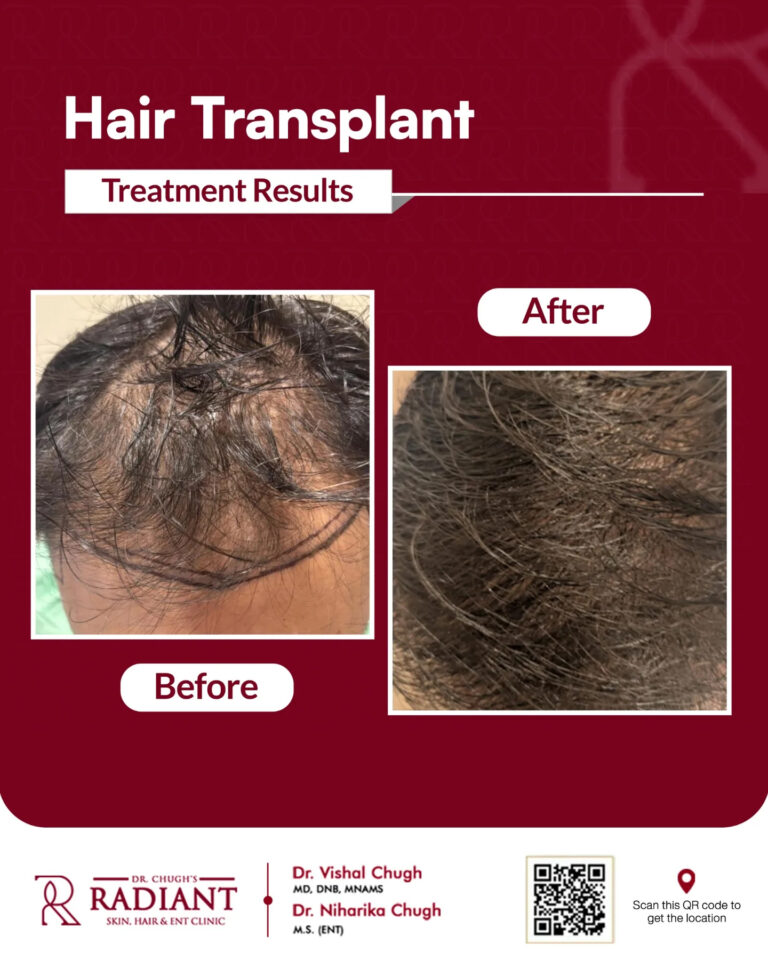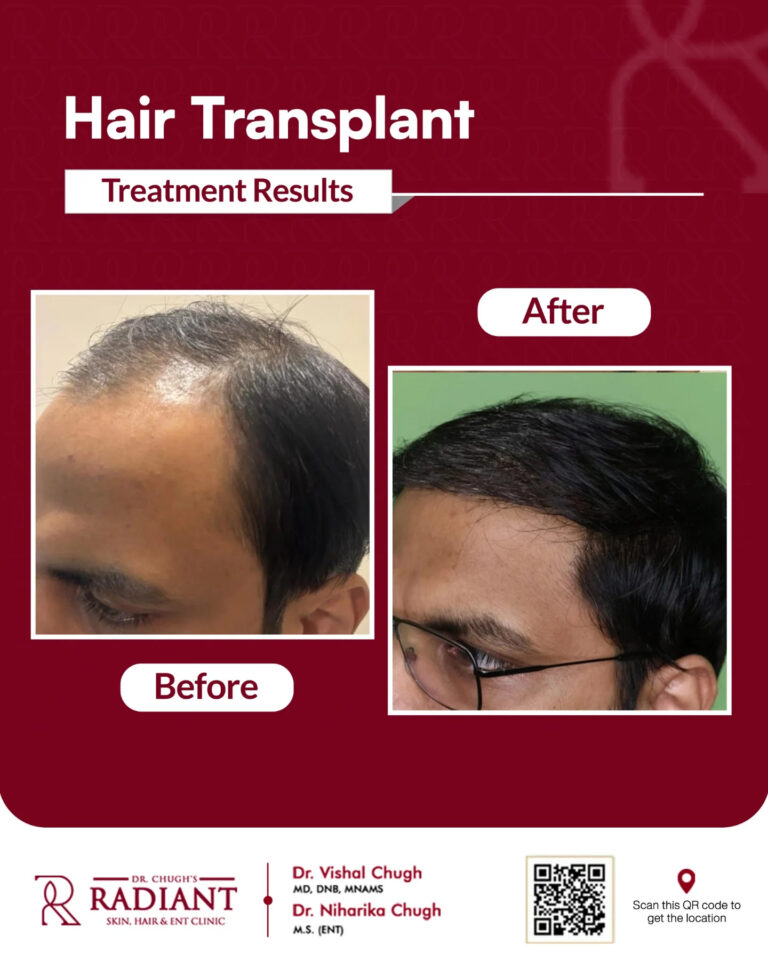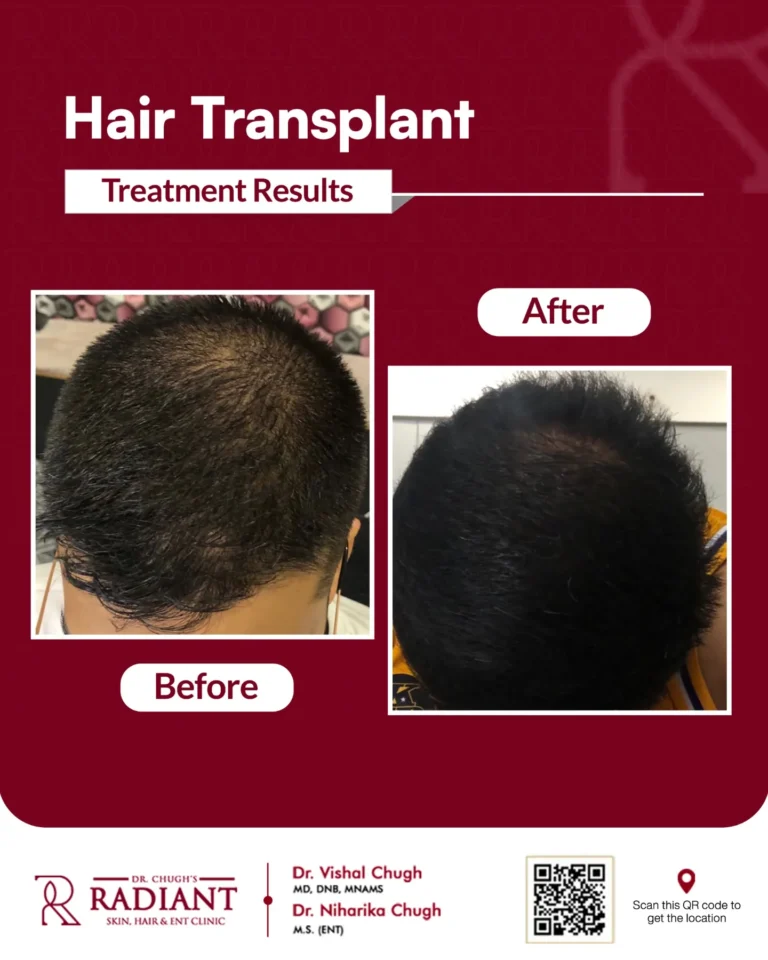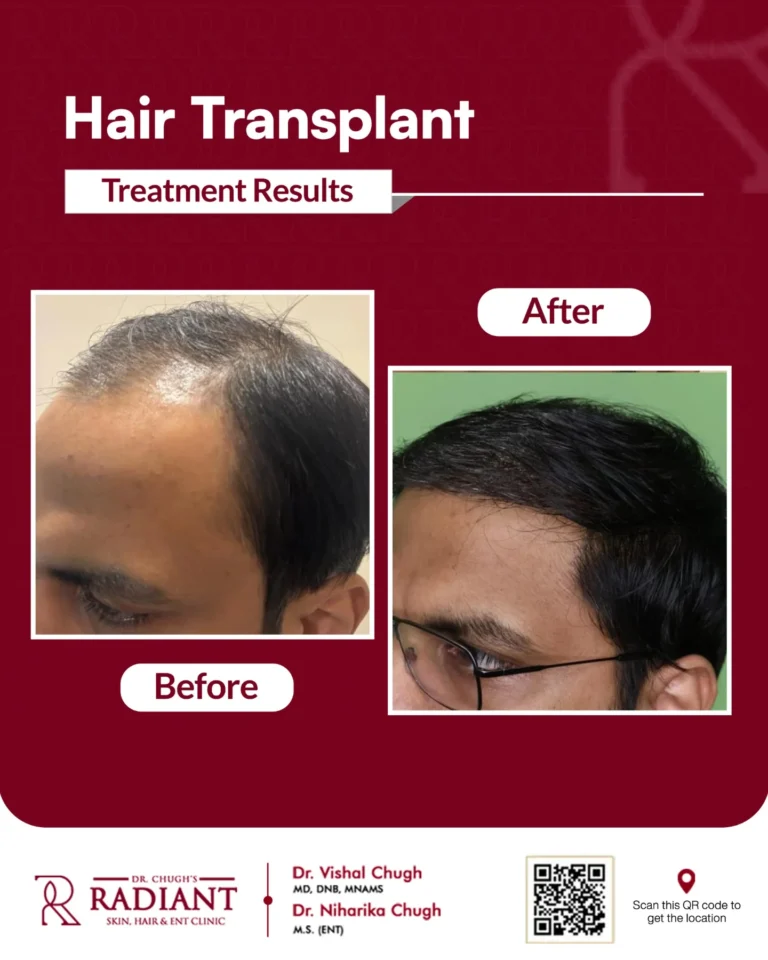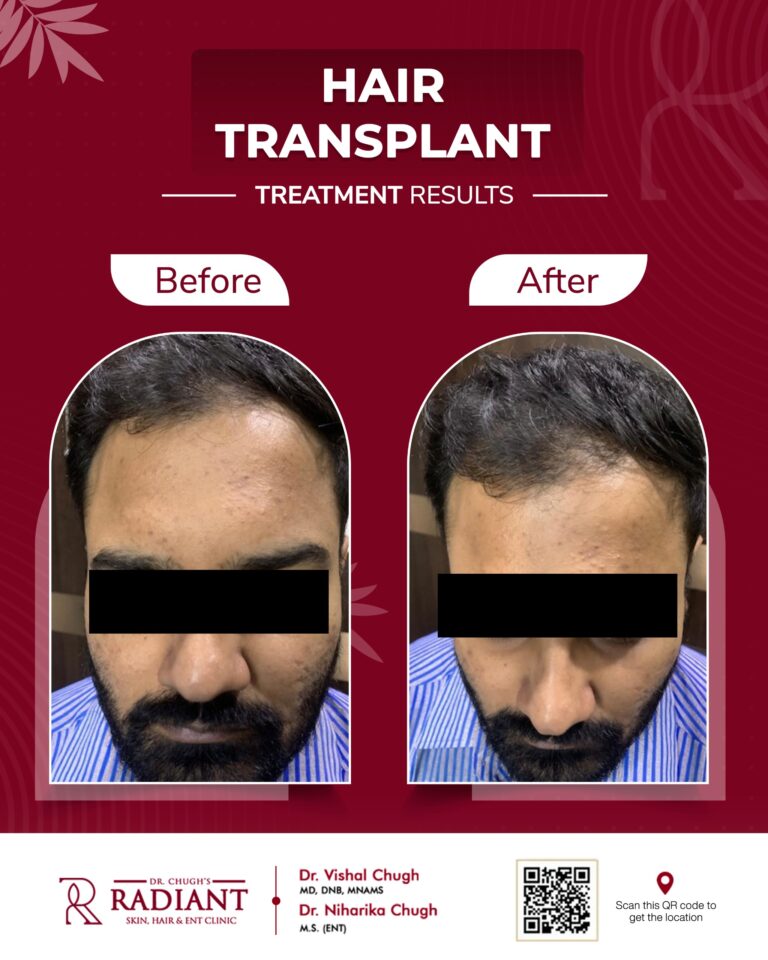
A hair transplant moves healthy hair from the back of your head to the areas that have gone thin or bald. The moved hair keeps growing for life, because hair at the back of the scalp is naturally resistant to male-pattern balding. At Dr. Chugh’s Radiant Skin, Hair & ENT Clinic in Civil Lines, we offer hair transplant in Jaipur for men and women, along with medical treatments that protect the hair you still have.
What is a hair transplant?
Hair grows in small groups of one to four hairs. Each group is called a follicular unit, or graft. In a hair transplant, the surgeon removes these grafts from a “donor area” and places them, one by one, in the thinning area.
There are two main ways to take the grafts:
- FUE (Follicular Unit Extraction): each graft is taken out individually with a tiny punch. It leaves very small dot scars that hide easily, even with short hair. This is the technique we use for most patients.
- FUT (strip method): a thin strip of skin is removed from the back of the head and split into grafts. It leaves a fine linear scar.
Dr. Chugh will tell you which method suits your hair, your donor area and your goals. You can read more about both techniques on the International Society of Hair Restoration Surgery website.
Who is a good candidate for a hair transplant?
A hair transplant works best when hair loss has a clear pattern and there is enough healthy donor hair. You may be a good candidate if you:
- have a receding hairline, a thin crown or male-pattern baldness
- have female-pattern thinning at the parting that has stayed stable
- want to restore eyebrows, a beard or hair lost to an old scar or injury
- have enough dense hair at the back and sides of your head
- are in good general health and have realistic expectations
A transplant is not the first step for everyone. If your hair is falling out fast, or you have patchy loss from alopecia areata, thyroid problems or low iron, the cause needs treatment first. In these cases, PRP for hair loss or GFC therapy may help more. Very young patients are usually advised to wait, because their pattern of hair loss is still changing.
How the hair transplant procedure works
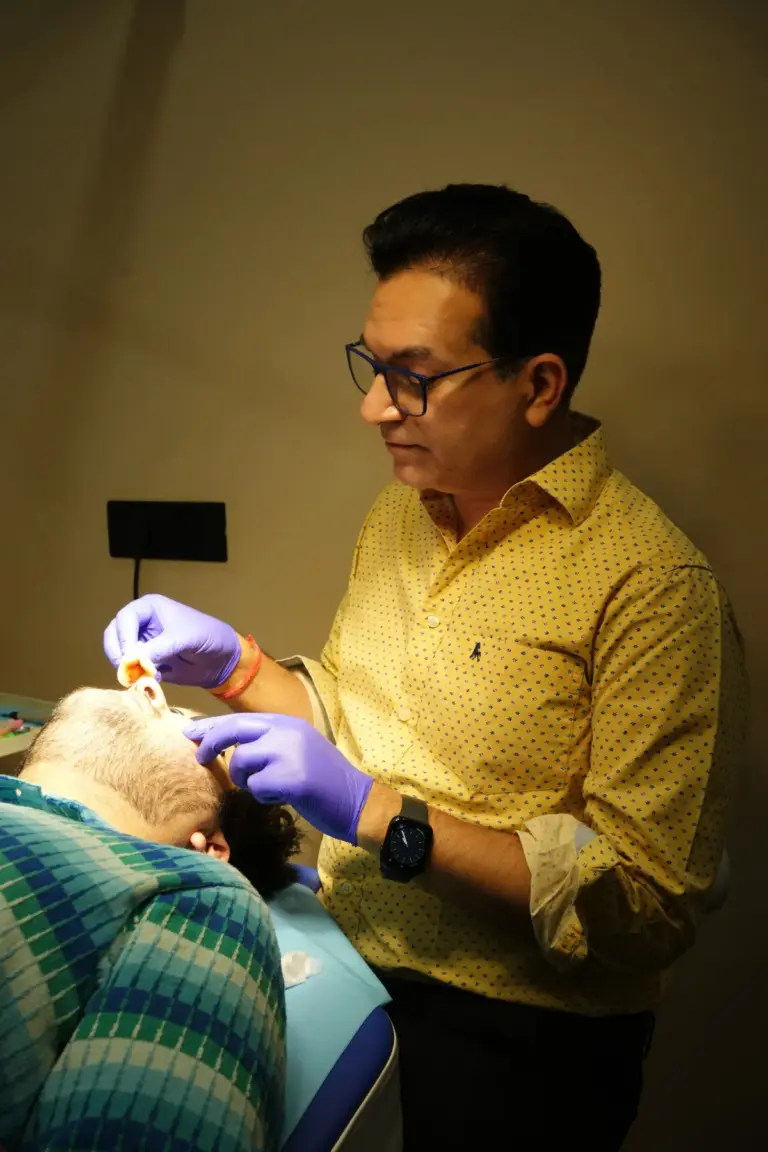
Here is what happens when you come to us for a hair transplant in Jaipur, from the first visit to going home. Most transplants are done in a single day under local anaesthesia. You stay awake and comfortable, and you can watch TV or listen to music.
- Consultation and scalp check. Dr. Chugh examines your scalp with a dermoscope, checks your donor area and may order blood tests. Then he explains how many grafts you need and what result to expect.
- Hairline design. On the day of surgery, your new hairline is drawn to suit your face and age. You see it and agree to it before anything starts.
- Numbing. The donor and recipient areas are numbed with local anaesthetic. After the first few injections, most people feel only pressure.
- Graft extraction. Grafts are removed from the back of your head and kept cool and moist until they are placed.
- Implantation. Each graft is placed at the right angle and direction, so the new hair grows naturally and blends with your own.
- Going home. You get written aftercare instructions and medicines, and you go home the same evening. The team tells you when to come back for your first check-up.