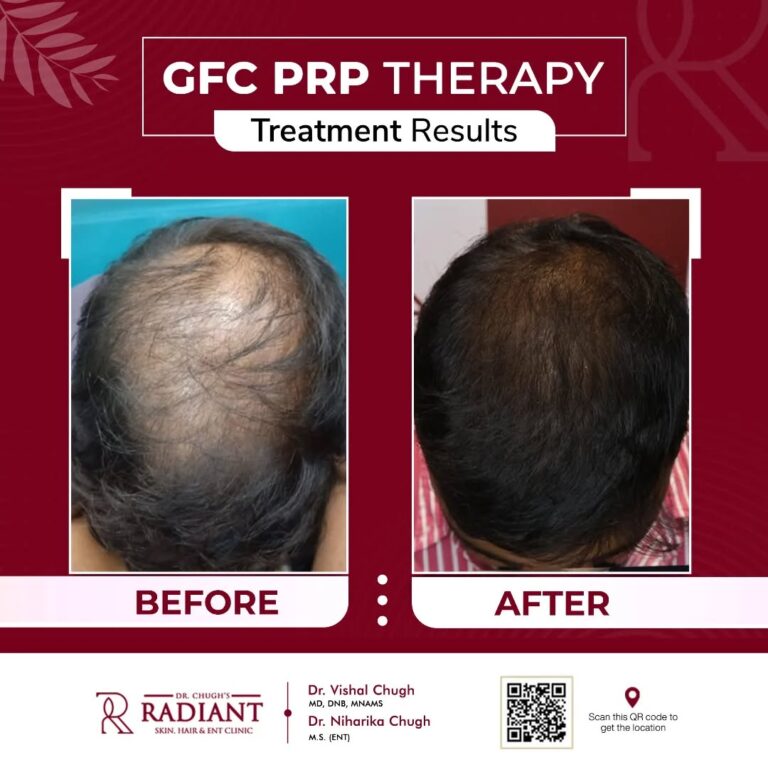
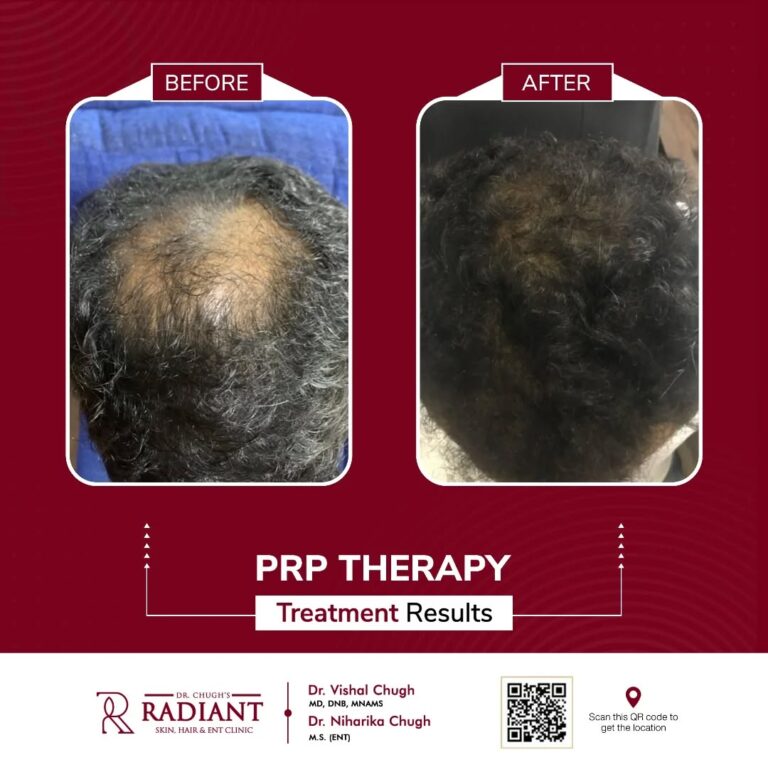
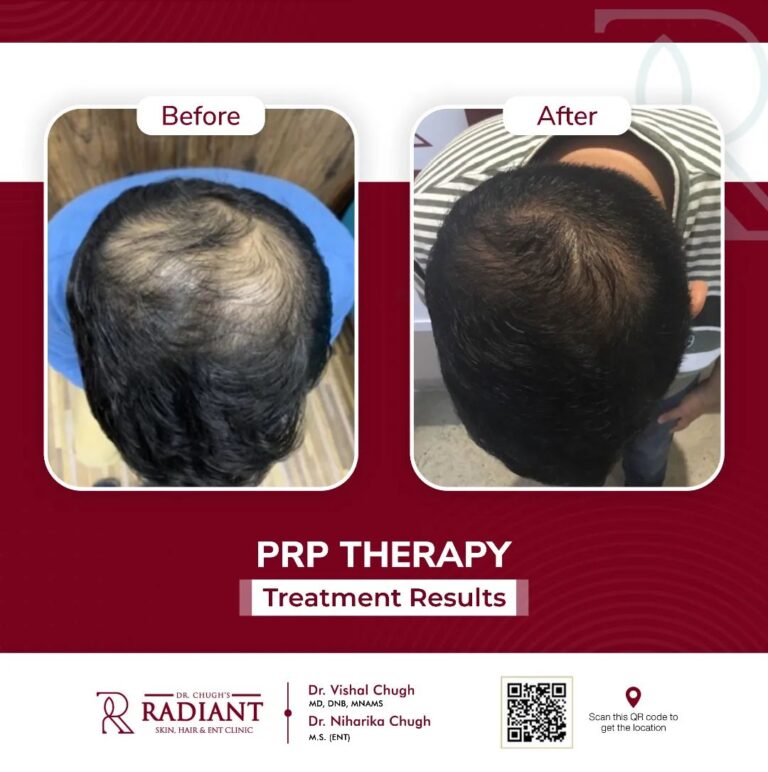
PRP (platelet-rich plasma) therapy uses a concentrate of platelets from your own blood. Platelets carry growth factors that help weak hair follicles become more active. When PRP is injected into the thinning areas of the scalp, it can reduce hair fall and improve hair thickness. At Radiant Skin Clinic, we offer PRP hair treatment in Jaipur for men and women with early to moderate hair thinning.
Who PRP helps the most
- early male pattern hair loss
- female pattern thinning and a widening parting
- hair fall after illness, stress or childbirth
- thinning hair that is still present but weak
- support after a hair transplant
PRP works on weak hair follicles. It cannot grow hair on areas that are completely bald. For those areas, a hair transplant may be the better option.
How PRP hair treatment is done
- Scalp check. The doctor examines your scalp and may advise blood tests to find the cause of hair fall.
- Blood sample. A small amount of blood is taken from your arm.
- Preparing PRP. The blood is spun in a centrifuge to separate the platelet-rich plasma.
- Numbing and injection. The scalp is numbed, and PRP is injected into the thinning areas with fine needles.
PRP works best as part of a plan
Hair fall usually has more than one cause, such as genes, hormones, low iron or vitamin levels, thyroid problems or stress. PRP works better when these are also treated.
The doctor may combine PRP with medicines, lotions or nutritional support for the best result.
Aftercare and results
The scalp may feel sore or tight for a day. You can go back to work the same day.
- Do not wash your hair for six to eight hours.
- Avoid hair colour and chemical treatments for a few days.
- Avoid heavy exercise and swimming for a day.
Hair fall often reduces after two or three sessions. Thicker hair is usually seen after three to six months. Maintenance sessions every few months help keep results.
PRP hair treatment cost in Jaipur
The PRP hair treatment cost in Jaipur depends on the number of sessions and the area treated. You get the exact cost after your scalp check.
Number of sessions
Packages lower the cost per session.
Area of thinning
Larger areas need more PRP.
PRP or GFC
GFC uses a different preparation.
Combined treatment
Medicines and tests add to the cost.
Treated by Dr. Vishal Chugh
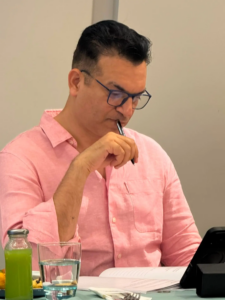
Dr. Vishal Chugh
MD, DNB, MNAMS · Dermatologist
Dr. Chugh is a dermatologist with MD, DNB and MNAMS qualifications. He finds the cause of your hair loss first, then decides whether PRP, GFC, medicines or a hair transplant will help you most.
Book a consultationWhy choose Radiant for PRP hair treatment in Jaipur
- Hair loss checked and treated by a dermatologist.
- The cause of hair fall is found before treatment starts.
- Sterile, single-use kits for every procedure.
- Honest advice on what each treatment can and cannot do.
- Medicines, PRP, GFC and hair transplant under one roof.
- Easy to reach in Civil Lines, on Hawa Sadak.
PRP for hair loss FAQs
Does PRP really work for hair loss?
PRP can reduce hair fall and improve thickness in many people with early to moderate thinning. It does not regrow hair on fully bald areas.
Is PRP hair treatment painful?
The scalp is numbed first, so most people feel only mild pricks and pressure.
How many PRP sessions do I need?
Most people start with four to six sessions, about four weeks apart, followed by maintenance.
When will I see results?
Hair fall usually reduces in two to three months. Thicker hair is seen after three to six months.
Is PRP safe?
Yes, for most healthy people, because it uses your own blood. The doctor checks for conditions that make it unsuitable.
PRP or GFC: which is better?
Both use growth factors from your blood. GFC is a more concentrated preparation. The doctor will advise which suits you.