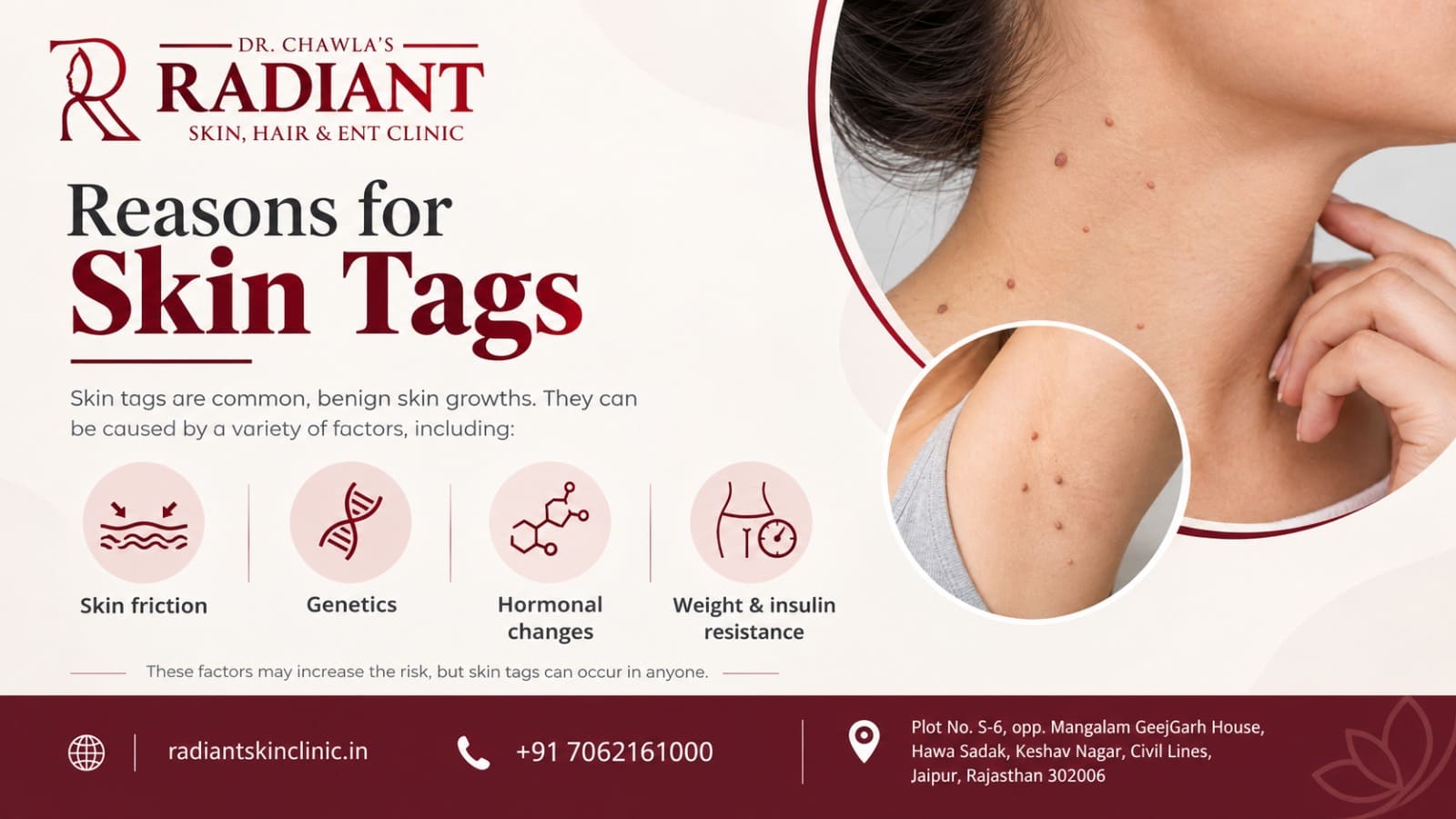
Skin tags usually happen from the skin rubbing against itself or against clothing. Skin tags usually form in areas with folds like the neck, armpits, and groin. Other possible reason for skin tags are hormonal changes, genetic factors, and metabolic conditions.
Skin tags are tiny pieces of tissue that hang from the skin. Almost all people get skin tags at some point in time. While skin tags are not a threat to health, people are curious to understand the reason for their formation.
There can be multiple reason for skin tags formation. Simple skin to skin or skin to clothing friction can also be a reason for skin tag formation. Other possible reasons can be underlying conditions like obesity and diabetes.
In this article, we will try to understand the reason for skin tags formation and see how concerned one should be with the formation of skin tags.
What Reason for Skin Tags
Reason for skin tags are trapping of blood vessels and collagen. Skin tags are composed of a core of blood vessels and a portion of collagen, and are seen in areas where the skin is folded or where skin rubs against skin.
Some people are more predisposed to skin tag formation than others. The following list outlines the most prevalent skin tag formation causes.
1. Skin-to-Skin Friction
Constant skin-to-skin or skin-to-irritant friction breaks down the upper layers of the skin, and over time, may lead to the formation of skin tags. Areas that are prone to skin-to-skin or skin-to-irritant friction develop skin tags more commonly. These areas include: neck (from jewelry and skin or clothing friction), under the arms (from skin-to-skin friction with arms and clothing), groin (from skin folds and tight clothing), under the breasts (from skin-to-skin friction with clothing and a bra), and the eyelids (from friction caused by blinking). Skin tags are often found in these areas because of constant skin-to-skin or skin-to-irritant friction.
2. Advanced Age
People over the age of 40 are more prone to skin tag formation than the younger population. Loss of skin elasticity with time makes the skin more prone to friction, which can ultimately lead to the formation of skin tags.
3. Obesity & Weight Gain: More Skin Folds, More Friction
Skinfolds create friction which worsens when obesity leads to increased skinfold formation. Hence, obesity increases the skin tags formation. Losing weight decreases friction and, as a result, the formation of skin tags is reduced.
4. Insulin Resistance & Type 2 Diabetes
There are numerous skin tags on a person due to insulin resistance and type 2 diabetes. Increased levels of insulin cause hyperplasia of skin and other tissues. Skin tags are one of the cutaneous manifestations of hyperinsulinemia.
If you note a rise in the skin tags on your body and experience other symptoms like extreme tiredness, feel a sudden increase in your thirst and/or hunger, then it is important that you talk to your health care provider regarding your blood sugar levels.
5. Hormonal Changes (Pregnancy, Miscarriage)
Skin tags are formed during pregnancy due to the hormonal changes in the body. Particularly during the last two terms, skin tag formation is noted. Skin tag formation is also seen in conditions where there is a hormonal imbalance due to excessive or reduced levels of estrogen and progesterone.
6. Genetics (Family History)
Skin tags formation is also genetics. If your relatives (family members) have skin tags, you have an increased risk of having skin tags. Skin structure, collagen, and skin renewal process are affected by genetics. Therefore, one can inherit predisposition for skin tags.
7. Metabolic Syndrome & Lipid Imbalance
Skin tags have been associated with conditions such as metabolic syndrome, high blood pressure, high blood sugar, and abnormal lipids. One theory is that skin tags may be an expression of an imbalance in skin cell turnover, leading to areas of abnormal skin cell proliferation.
8. Hormonal & Endocrine Disorders
There are a number of endocrine disorders, including PCOS and acromegaly, which can lead to the development of skin tags. Skin tags may also occur during normal pregnancy, as well as with other hormonal changes. Some dermatologists evaluate the hormonal status of patients with multiple skin tags to help determine the cause of the skin tags.
9. Other Medical Conditions
Skin tags have been reported in conjunction with a number of other medical conditions including:
- Human papillomavirus
- Inflammatory bowel disease and other inflammatory conditions
- Genetic conditions affecting the skin and connective tissue
While the presence of skin tags does not mean an individual has the above medical conditions, your dermatologist can help you if you are concerned.
When to See Your Dermatologist
Skin tags normally do not need to be removed. They may be removed for cosmetic or aesthetic concerns, if they are irritated, or if they become traumatized (snagged on jewelry, etc.). Sudden onset of numerous skin tags may indicate an underlying condition, but typically skin tag removal is at the request of the patient.
Radiant Skin & ENT Clinic is one of the best dermatology clinics in Jaipur, and we take pride in our professional services. With our extensive experience in dermatology, we offer our clients multiple options when it comes to skin tag removal, taking into consideration our clients’ individual needs and skin types.
Skin Tag Growth is Often Inexplicable
The growth of skin tags is often beyond our control. They can be attributed to friction, old age, obesity, metabolic conditions, and/or genetic factors. In order to control the growth of skin tags, you can make lifestyle modifications like losing weight. Skin tag growth can also be controlled by routine professional check-ups and removal of existing skin tags.
It is always advisable to get an evaluation by a qualified dermatologist in jaipur to ascertain if an abnormal skin growth is harmful. Radiant Skin & ENT Clinic is committed to providing quality dermatology services to all our clients and to helping them achieve their goal of having healthy skin.
Frequently Asked Questions
What causes skin tags?
There are numerous factors that may lead to the development of skin tags. These include friction from skin rubbing against skin, aging, obesity, hormonal changes, genetic factors, and insulin resistance.
Are skin tags a sign of diabetes?
Skin tags are not a marker of diabetes. However, some studies have shown that skin tagpatches may be associated with insulin resistance and type 2 diabetes.
Do skin tags go away?
Skin tags do not go away on their own. Smaller skin tags may be lost due to disturbance of the connecting skin.
Is skin tag removal safe?
It is safe to remove skin tags. There are several methods to remove skin tags including freezing, cautionery, and cutting. These procedures are safe and not painful.
How can skin tags be prevented?
Skin tags are inherited, thus may not be preventable. However, reduction of skin friction may prevent skin tags. Obesity and diabetes are associated with skin friction and skin tags. Thus, control of body weight and blood sugar levels may prevent skin tags.