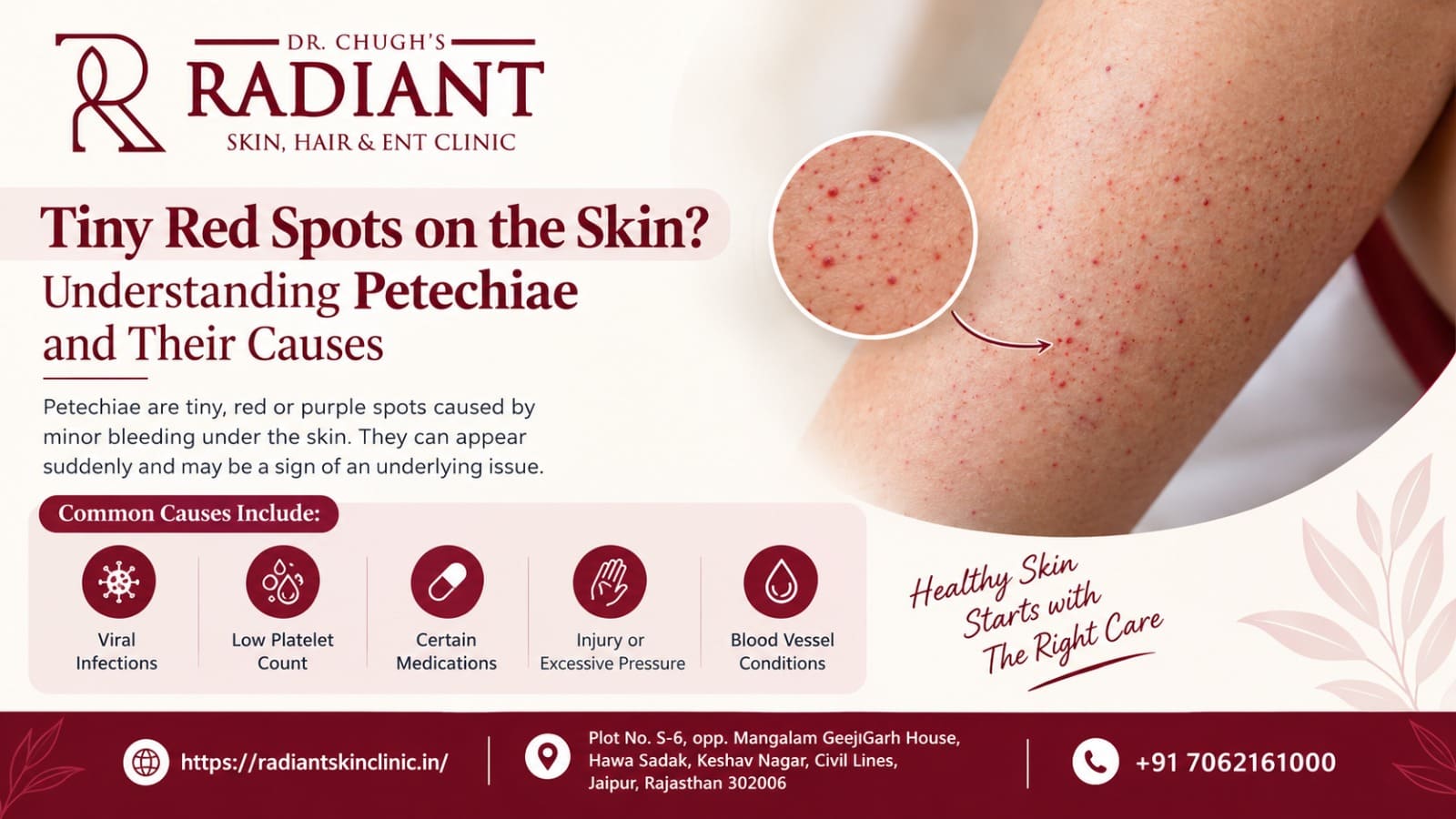
Finding tiny red spots on skin can instantly trigger worry. If you have recently noticed flat, pinprick-sized red, purple, or brown dots that do not fade when you press on them, you might be looking at petechiae. While some causes are completely harmless—such as mild physical strain—others require professional medical evaluation to rule out underlying blood or immune disorders.
For residents of Rajasthan looking for expert medical advice, consulting the Best Dermatologist in Jaipur or visiting a reputable Skin Clinic in Jaipur is the safest way to get an accurate diagnosis. In this comprehensive guide, we will break down what petechiae are, how they differ from other skin conditions, their various causes, and when you should see a Skin Specialist in Jaipur.
What Are Petechiae? Understanding Tiny Red Spots on the Skin
Petechiae (pronounced puh-TEE-kee-ee) are tiny, round spots that appear on the skin as a result of bleeding under the surface. They typically measure between 1 to 2 millimeters in diameter—roughly the size of a pinhead.
Unlike regular rashes or bug bites, petechiae are caused when tiny blood vessels called capillaries break and leak blood into the skin. A defining characteristic of petechiae is that they are non-blanching. This means if you press your finger against them or roll a glass tumbler over them, they will not fade or turn white; they maintain their distinct color. They are usually completely flat and typically painless, often appearing in clusters that resemble a rash.
Petechiae vs. Rash vs. Purpura – How to Tell the Difference
It is very common to confuse petechiae with other dermatological signs. Understanding the structural differences helps you communicate better with your Skin Specialist in Jaipur.
1. Petechiae
-
Size: Pinpoint (1–2 mm).
-
Appearance: Tiny red, purple, or brown dots.
-
Behavior: Non-blanching (does not fade under pressure).
-
Cause: Ruptured microscopic capillaries (capillary leaking).
2. Purpura
-
Size: Larger than petechiae, generally ranging from 3 mm to 1 centimeter or more.
-
Appearance: Larger purple or reddish-blue patches or bruises.
-
Behavior: Generally non-blanching.
-
Cause: Often related to similar underlying bleeding disorders, blood vessel inflammation (vasculitis), or trauma, but covering a larger surface area.
3. Rash
-
Size: Varies significantly.
-
Appearance: Red, inflamed, raised, scaly, or bumpy areas of skin.
-
Behavior: Often blanching (turns white or fades temporarily when pressed).
-
Cause: Allergic reactions, eczema, contact dermatitis, fungal/bacterial infections, or heat.
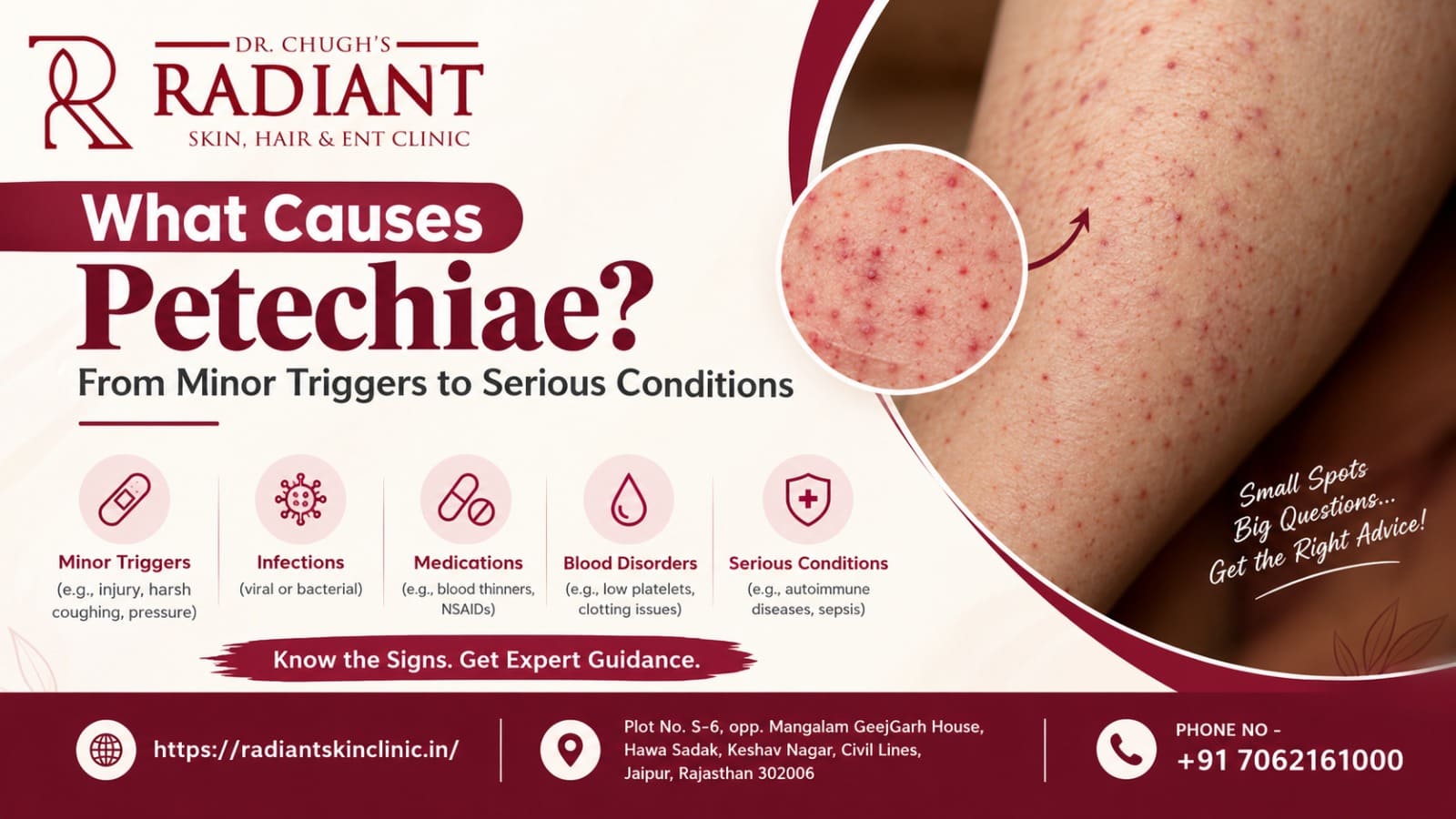
What Causes Petechiae? From Minor Triggers to Serious Conditions
The appearance of tiny red spots on skin can stem from a wide range of factors, varying from harmless everyday strain to complex medical conditions.
 1. Minor Physical Strain
Any activity that violently increases pressure in the capillaries can cause them to burst. Common triggers include:
-
Severe, prolonged coughing fits
-
Vomiting or forceful retching
-
Heavy weightlifting or intense straining
-
Severe crying or shouting (often seen as petechiae around the eyes)
-
Straining during childbirth
2. Injuries or Trauma
Direct physical trauma to the skin can break surface capillaries. This includes:
-
Wearing excessively tight clothing, socks, or athletic gear that compresses the skin
-
Sunburns or minor physical friction
-
Tight straps from backpacks or heavy bags
3. Viral and Bacterial Infections
Certain infections cause systemic inflammation or temporarily lower blood platelet counts, triggering petechiae. Examples include:
-
Strep throat
-
Scarlet fever
-
Mononucleosis (mono)
-
Cytomegalovirus (CMV)
-
Viral hemorrhagic fevers (like Dengue fever, which is particularly prevalent seasonally in various parts of India)
-
Endocarditis (infection of the heart valves)
-
Meningococcemia (a serious bacterial infection)
4. Low Platelet Count (Thrombocytopenia)
Platelets are essential blood cells that help your blood clot. When your platelet count drops too low, your body cannot easily plug minor tears in blood vessels, leading to spontaneous bleeding and petechiae. This can be caused by medications, alcohol abuse, or autoimmune issues.
5. Blood and Bone Marrow Disorders
Conditions affecting how blood cells are produced—such as leukemia, myelodysplastic syndromes, or severe aplastic anemia—frequently manifest with petechiae, bruising, and general fatigue.
6. Vitamin Deficiencies
A severe lack of essential micronutrients can weaken blood vessel walls:
-
Vitamin C deficiency (leading to scurvy)
-
Vitamin K deficiency (impacting clotting factors)
7. Certain Medicines
Some prescription drugs can cause petechiae as a side effect, either by affecting platelet function or through an allergic reaction. Common culprits include:
-
Blood thinners (anticoagulants and antiplatelet drugs like aspirin or warfarin)
-
Certain antibiotics (such as penicillin and sulfonamides)
-
Sedatives and anti-seizure medications
8. Autoimmune Disorders
Conditions where the immune system mistakenly attacks healthy tissue—such as systemic lupus erythematosus (SLE) or vasculitis (inflammation of the blood vessels)—can cause localized or widespread petechiae.
Other Causes of Red Spots on Skin
While petechiae are distinct, patients visiting a Skin Clinic in Jaipur often ask about other conditions that create red spots on skin. These may include:
-
Cherry Angiomas: Harmless, bright red, smooth dome-shaped bumps made of clusters of small capillaries. They typically appear with age and are completely benign.
-
Spider Angiomas: A central red dot with reddish extensions radiating outward like a spider’s web, often triggered by hormonal shifts or liver issues.
-
Keratosis Pilaris: Small, rough, red or flesh-colored bumps often called “chicken skin,” caused by keratin buildup in hair follicles.
-
Contact Dermatitis: Localized red patches or spots caused by an allergic reaction to soaps, fabrics, or cosmetics.
How Petechiae Are Diagnosed: Tests, Evaluation, and What Doctors Look For
Because petechiae can signal anything from a harmless coughing spasm to an urgent hematological condition, a proper medical evaluation is essential. When you visit a specialist, the diagnostic process generally involves:
1. Physical Examination
Your doctor will closely examine the spots, check whether they fade under pressure, and map their distribution across your body. They will also inquire about your medical history, recent infections, medications, and physical activities.
2. Blood Tests
-
Complete Blood Count (CBC): To check your red blood cell count, white blood cell count, and specifically your platelet count (thrombocytes).
-
Coagulation Studies: Tests like Prothrombin Time (PT) and Partial Thromboplastin Time (PTT) to evaluate how well your blood clots.
3. Additional Investigations
Depending on initial findings, your physician may recommend inflammatory markers, liver and kidney function tests, or a referral to a hematologist for bone marrow evaluation if a systemic blood disorder is suspected.
When to Seek Medical Care for Petechiae
While minor petechiae caused by a single bout of coughing or tight clothing usually fade on their own within a few days, certain symptoms require immediate emergency medical attention.
Seek urgent care if petechiae are accompanied by:
-
Fever, chills, or sudden dizziness
-
Spontaneous nosebleeds, bleeding gums, or blood in your urine/stool
-
Rapid spreading of the spots across large areas of the body
-
Difficulty breathing or confusion
-
Petechiae combined with a high fever in children (which can indicate meningococcal disease)
FAQs
1. Are petechiae itchy or painful?
No. True petechiae are typically flat, smooth, and neither itchy nor painful. If the spots are intensely itchy or raised, they are more likely to be an allergic reaction, hives, or an infectious rash.
2. Can stress cause petechiae?
Emotional stress alone does not directly cause petechiae. However, extreme physical stress—such as violent vomiting, severe coughing fits, or heavy lifting brought on by high-pressure situations—can rupture capillaries and cause them to appear.
3. How long do petechiae take to clear up?
Once the underlying trigger is resolved, petechiae typically fade and change color (turning yellowish-brown or green, much like a healing bruise) within a few days to a week.
4. When should I consult a professional dermatologist?
If you notice unexplained red spots that do not fade when pressed, or if they keep recurring without an obvious cause, it is wise to consult the Best Dermatologist in Jaipur for a thorough evaluation and peace of mind.
Conclusion
Finding tiny red spots on your skin can be unsettling, but understanding petechiae helps you take the right steps toward your health. While many instances stem from minor physical strain or mild viral illnesses, others can be an indicator of underlying systemic issues requiring expert medical guidance.
If you are experiencing unexplained skin spots and need expert reassurance, schedule a consultation at a trusted Skin Clinic in Jaipur. Getting evaluated by an experienced Skin Specialist in Jaipur ensures you receive an accurate diagnosis and a safe, effective path forward.