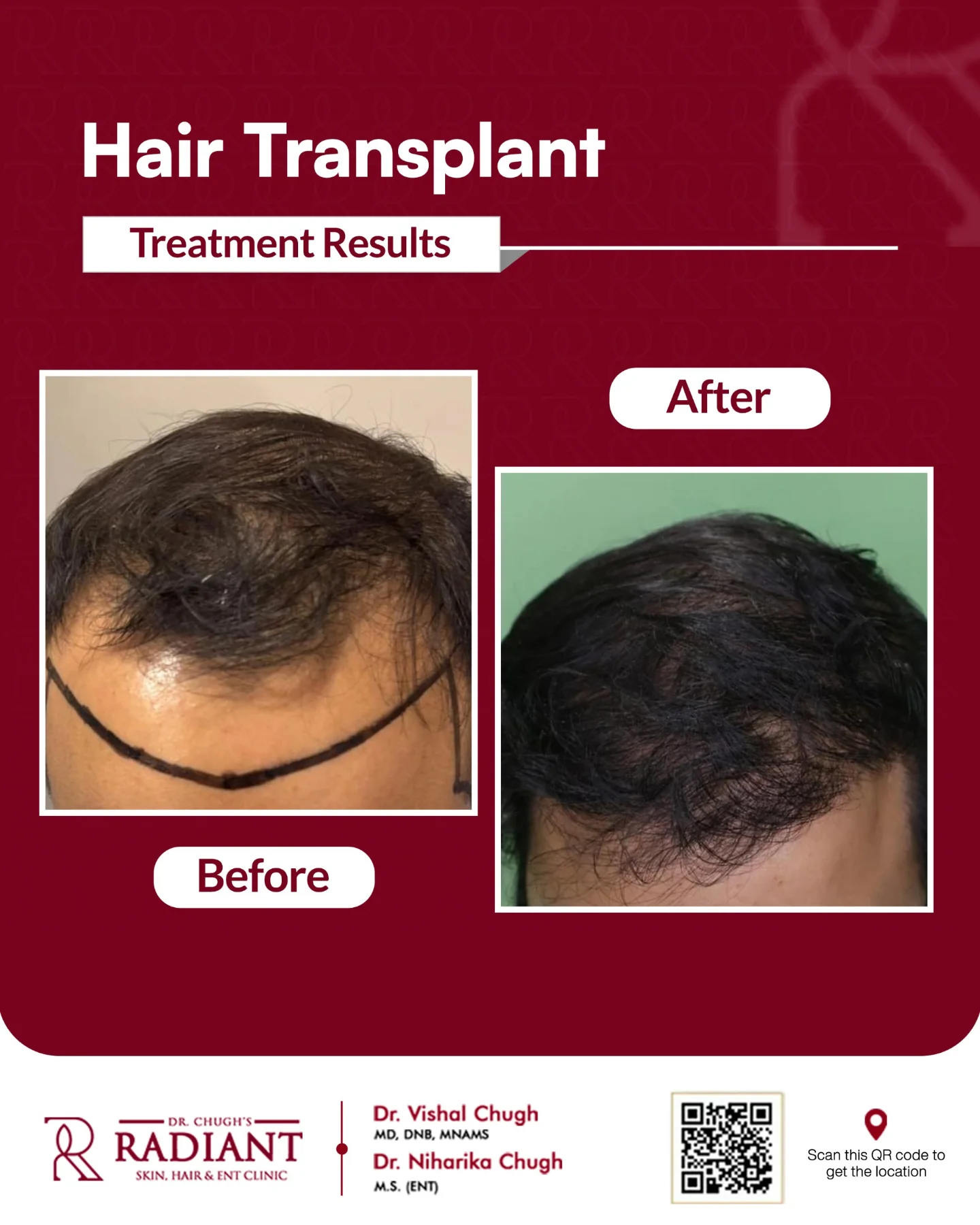
Natural Hair Transplant in Jaipur focuses on creating a balanced and natural-looking appearance through careful graft planning, suitable hairline design, donor-area management, and strategic follicle placement. A successful hair transplant involves much more than simply transferring follicles from one area of the scalp to another. Hair characteristics, graft distribution, placement angle, donor density, and the future progression of hair loss can all influence the overall outcome.
For people considering a Hair Transplant in Jaipur, understanding these factors can make it easier to set realistic expectations before undergoing the procedure. At Radiant Skin and Hair Clinic, Dr. Vishal Chugh evaluates the pattern of hair loss, scalp condition, donor availability, and individual restoration goals before discussing an appropriate treatment plan.
This guide explains hair grafts, hairline design, transplant techniques, donor management, recovery, and the factors that contribute to natural-looking hair restoration.
What Exactly Is a Hair Graft?
A hair graft is a small piece of scalp tissue containing one or more hair follicles. Naturally occurring follicular units commonly contain between one and four hairs.
During a hair transplant, the clinical team obtains suitable follicles from the donor region, usually the back or sides of the scalp, and places them into areas affected by permanent hair loss.
Hair grafts can include:
- Single-hair follicular units
- Two-hair follicular units
- Three-hair follicular units
- Occasionally larger follicular groupings
However, a successful transplant does not depend only on the number of grafts. The quality of donor hair, careful handling, distribution, and placement of follicles also influence the final appearance.
Why Graft Planning Matters for Natural Hair Transplant in Jaipur
Every patient has a limited supply of donor follicles. Therefore, a Natural Hair Transplant in Jaipur requires thoughtful graft planning rather than simply aiming for the highest possible graft count.
Before planning transplantation, several factors require consideration:
- Pattern and extent of hair loss
- Donor-area density
- Hair thickness and texture
- Existing hair density
- Size of the recipient area
- Quality of donor follicles
- Patient’s age
- Potential progression of hair loss
- Long-term restoration goals
For example, two people with similar levels of hair loss may need different numbers of grafts because their hair thickness, donor density, scalp characteristics, and existing hair can differ significantly.
Therefore, patients should avoid comparing their graft requirements with another person’s procedure.
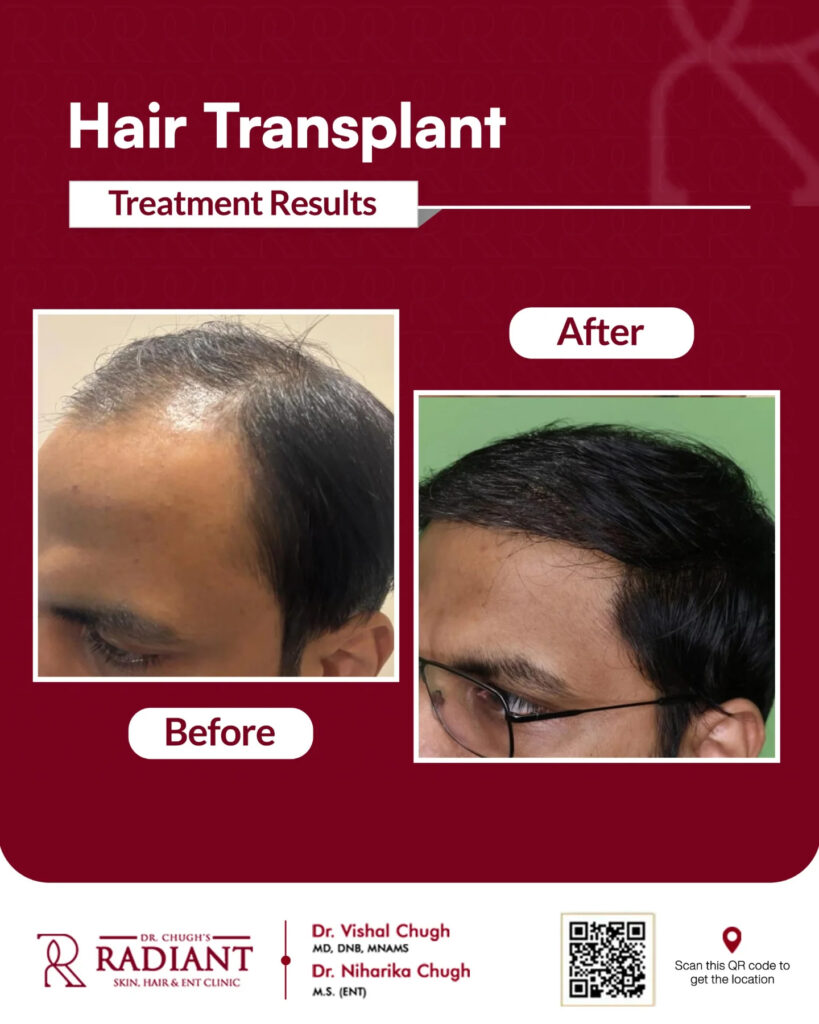 Understanding the Donor Area
The donor area serves as the source of follicles for transplantation. In many patients with pattern hair loss, follicles from the back and sides of the scalp tend to retain their characteristics better than follicles in areas affected by progressive thinning.
Before transplantation, the doctor may evaluate:
- Donor density
- Hair shaft thickness
- Hair texture
- Scalp condition
- Previous procedures
- Available follicular units
- Expected future requirements
Careful donor management is particularly important because extracted follicles do not regenerate in the exact extraction sites. Preserving sufficient donor density also helps maintain a balanced appearance and leaves options available if the patient requires additional restoration in the future.
Common Hair Transplant Techniques
The appropriate technique depends on the patient’s pattern of hair loss, donor availability, scalp characteristics, and restoration goals.
FUE – Follicular Unit Extraction
Follicular Unit Extraction, commonly known as FUE, involves removing individual follicular units from the donor area with small punches. The team then prepares and places these follicles into the planned recipient areas.
Potential features of FUE include:
- Individual follicular-unit extraction
- Small extraction sites
- No long linear donor scar
- Strategic selection of donor follicles
- Flexibility in graft distribution
However, excessive extraction can reduce donor density. Therefore, proper planning remains essential.
FUT – Follicular Unit Transplantation
Follicular Unit Transplantation involves removing a narrow strip of scalp from the donor region. The surgical team separates this strip into individual follicular units before transplantation.
FUT may provide an option for selected patients depending on their donor characteristics and graft requirements. Since the technique generally creates a linear donor scar, patients should discuss its benefits and limitations during consultation.
Hairline Design: A Key Part of Natural Hair Restoration
The frontal hairline is one of the most visible aspects of a hair transplant. Even if transplanted follicles grow well, an excessively low, perfectly straight, or poorly planned hairline may appear unnatural.
A well-planned hairline should take into account:
- Facial shape
- Facial proportions
- Patient’s age
- Existing hairline pattern
- Forehead dimensions
- Degree of hair loss
- Available donor supply
- Natural direction of hair growth
- Possible future thinning
Rather than following the same template for everyone, hairline design should complement the individual’s facial features and long-term hair-loss pattern.
Why Single-Hair Grafts Matter at the Front
Natural hairlines usually do not start with a dense, straight row of thick hair. Instead, they tend to show a gradual transition from finer individual hairs at the front to greater density behind them.
For this reason, single-hair follicular units often play an important role in frontal hairline planning.
A strategic approach may include:
- Placing single-hair grafts near the frontal edge
- Using multi-hair grafts behind the hairline
- Creating appropriate spacing
- Following natural growth direction
- Gradually increasing visual density
This distribution can help the transplanted area blend more naturally with surrounding hair.
Direction and Angle of Grafts Also Matter
Natural-looking results depend not only on where grafts go but also on how the doctor positions them.
Hair grows at different angles and directions across different areas of the scalp. For instance, frontal hair usually follows a different pattern from hair around the crown.
During graft placement, the treatment plan should consider:
- Natural hair direction
- Existing follicle angles
- Hairline pattern
- Crown or whorl pattern
- Surrounding native hair
- Desired styling flexibility
Careful attention to these details can help transplanted hair blend with the patient’s existing hair as it grows.
Does a Higher Graft Count Mean Better Results?
Not always.
Many patients assume that receiving more grafts automatically creates better density. However, donor hair is a limited resource. Removing too many follicles may affect the appearance of the donor region and reduce options for future procedures.
Overharvesting may contribute to:
- Reduced donor density
- Patchy donor appearance
- Limited graft availability for future treatment
- Poor balance between donor and recipient areas
Therefore, responsible transplantation focuses on efficient graft use rather than simply maximizing the number of follicles extracted.
What Influences Natural Hair Transplant Results?
Several factors work together when planning a Natural Hair Transplant in Jaipur. No single factor determines the entire outcome.
1. Appropriate Candidate Selection
People with established pattern hair loss, sufficient donor hair, and realistic expectations may make suitable candidates for transplantation.
2. Donor Hair Characteristics
Hair thickness, density, texture, and colour contrast with the scalp can influence the visual appearance of coverage.
3. Hairline Planning
An age-appropriate hairline should complement the patient’s facial proportions rather than simply recreate a much younger hairline.
4. Graft Selection and Distribution
Using different follicular units strategically can help create a gradual transition and improve the appearance of density.
5. Placement Direction
Matching the natural angle and direction of surrounding hair contributes to a more harmonious appearance.
6. Future Hair Loss
Existing non-transplanted follicles may continue to thin. Therefore, long-term planning should account for possible future changes.
Who May Be a Suitable Candidate?
Not everyone experiencing hair fall needs transplantation. Some types of temporary or active hair shedding may require medical evaluation and management instead.
Potential candidates may include people with:
- Established pattern hair loss
- Adequate donor density
- Healthy scalp condition
- Realistic expectations
- Suitable general health
- A manageable donor-to-recipient requirement
Patients experiencing sudden or unexplained hair shedding should first determine the underlying cause before considering surgical restoration.
What to Expect After Hair Transplantation
Following a Hair Transplant in Jaipur, patients may notice temporary changes in the scalp during the initial recovery period.
These can include:
- Mild redness
- Temporary swelling
- Small crusts around grafts
- Scalp sensitivity
- Early shedding of transplanted hair shafts
Shedding of transplanted hair during the initial phase can occur as part of the post-transplant cycle. New hair growth then develops gradually as the follicles progress through their natural growth phases.
Therefore, patients should not expect immediate final density. Hair restoration requires time, and the growth timeline can vary between individuals.
Aftercare for Transplanted Hair
Following the clinical team’s instructions helps protect the grafts during early recovery.
Patients may receive guidance regarding:
- How and when to wash the scalp
- Avoiding scratching or rubbing
- Sleeping position
- Exercise and strenuous activity
- Sun and heat exposure
- Hair products
- Prescribed medicines
- Follow-up appointments
Patients should follow their doctor’s specific instructions because recovery recommendations can vary according to the procedure and individual circumstances.
Natural Hair Restoration at Radiant Skin and Hair Clinic
At Radiant Skin and Hair Clinic, Dr. Vishal Chugh assesses hair-loss patterns, donor availability, scalp condition, and individual expectations before discussing hair restoration options.
The approach to a Natural Hair Transplant in Jaipur should focus on creating an individualized plan rather than applying the same graft number or hairline design to every patient. Careful donor management, suitable follicle distribution, and consideration of future hair loss all form important parts of treatment planning.
Moreover, not every type of hair loss requires surgery. Depending on the cause and severity of thinning, patients may need to discuss non-surgical hair-loss management or other appropriate options.
Conclusion
Natural-looking hair restoration involves much more than transplanting a large number of grafts. Donor quality, follicular-unit selection, hairline design, placement angle, density distribution, and long-term planning all influence the overall appearance.
Patients considering hair restoration should focus on individualized assessment rather than comparing their graft requirements or expected results with someone else. At Radiant Skin and Hair Clinic, Dr. Vishal Chugh evaluates the scalp and hair-loss pattern to help patients understand whether transplantation or another hair restoration approach may suit their needs.
A detailed consultation can help establish realistic expectations and develop a treatment plan based on the patient’s donor hair, degree of hair loss, and long-term restoration goals.
Frequently Asked Questions
1. How many grafts are needed for a hair transplant?
There is no fixed graft requirement for everyone. The number depends on the size of the recipient area, donor density, hair thickness, existing hair, desired coverage, and long-term treatment plan.
2. What makes a hair transplant look natural?
Hairline design, appropriate graft selection, density distribution, natural placement angles, donor management, and consideration of future hair loss all contribute to a natural-looking appearance.
3. How long does it take to see hair transplant results?
Hair growth occurs gradually after transplantation. Initial shedding may occur before new growth develops over the following months. The exact timeline and final appearance vary between individuals.